

By: Brandon Bossenbeger
/
Reading time: 8 min.
The old saying, “you are what you eat” still holds true today – even with deer. What your deer are eating matters. Whether you own your property outright or are looking to maximize the potential on a new hunting lease, a properly executed mineral strategy can be a crucial factor in giving your deer herd the slight edge and growing advantage this offseason. Do not fall victim to buying the minerals and feed with the giant bucks on the packaging. Take the time to read the labels.
Building The Headgear
Antler growth is essentially the fastest bone development in nature. It’s an incredibly taxing process that puts an immediate strain on a buck’s skeletal reserves. The process a buck goes through every spring to grow a new set of antlers requires a massive, continuous influx of minerals. Bucks gather these minerals through a diet of native browse, regenerative vegetation, hard mast and agriculture crops. These plants absorb nutrients and minerals from the soil, the deer consume these plants, and use the minerals and nutrients.
Every winter a buck sheds his antlers. As soon as the antlers drop from the buck’s head, the pedicle immediately begins its healing process by scabbing over– to protect the exposed tissue. As daylight increases and testosterone levels begin their slow seasonal climb, bucks start pulling stored calcium and phosphorus directly from their blood supply to fuel new velvet growth.
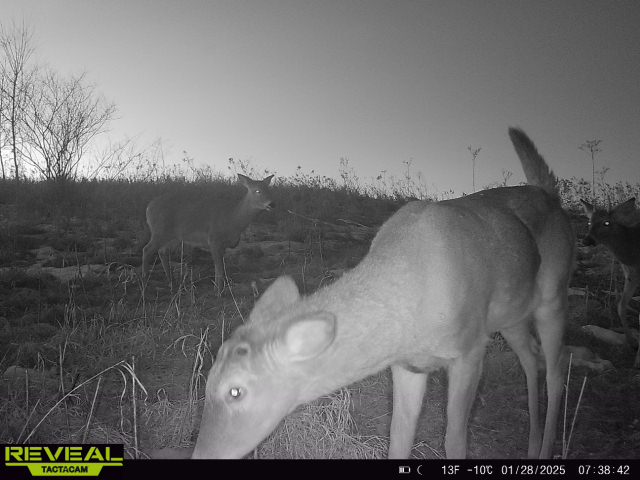
Buck that has shed both his antlers. Pedicles are beginning to heal and scab over.
If the local forage and browse are insufficient and do not provide the needed nutrients and minerals to grow and nurture a buck's health, a buck will not reach his full antler potential. In severe cases bucks will resort to pulling minerals from their own bone and skeletal structure to make up for the deficit. This is called osteoporosis. By providing a high-quality mineral site in the early spring, you minimize stress while maximizing the genetic potential of his rack. Waiting until late July or August to establish a mineral site means you have already missed the window where skeletal demand is highest. Always check state regulations before feeding.
The Lactation Demand on Does
While hunters often focus on antlers, herd managers know that does drive the population. Pregnant does, especially those carrying more than one fawn face an energy and nutrient demand that often exceeds the demand placed on bucks.
Doe gestation and lactation require enormous levels of calcium and phosphorus for fetal bone development and milk production. A doe that is nutritionally stressed during late spring will produce less milk and a lower quality of milk. Furthermore, a depleted doe heading into the fall is less likely to successfully breed during her first estrous cycle. Providing a supplemental mineral source improves the quality and increases the production of milk, resulting in a healthier fawn.

Healthy fawn in summer.
Don’t Get Salty
Not all mineral supplements are created equal. The most common mistake hunters and land managers make when creating a mineral site, is that they are feeding salt– not knowingly.
While deer crave salt, it is not a nutrient that builds bone and antler. It is an attraction that drives consumption. If your mineral block is 95% salt and 5% trace minerals, you are effectively just keeping the herd thirsty, not healthy. The golden rule of mineral supplementation is understanding the specific dietary elements deer require.
Macro vs. Micro Minerals
To build an effective site, you need a mix that balances both macro and micro minerals.
| Mineral Type | Specific Elements | Biological Function in Whitetails |
|---|---|---|
| Macro Minerals | Calcium, Phosphorus, Magnesium, Sodium | Structural integrity of bone, energy transfer, milk production, hydration, and appetite stimulation. |
| Micro (Trace) Minerals | Zinc, Copper, Selenium, Manganese, Cobalt | Immune system function, metabolism, antler density, and reproductive health. |
Common mineral types and functions at a glance.
For optimal skeletal and antler growth, nutritionists and wildlife biologists generally recommend a calcium-to-phosphorus ratio of 2:1. If a supplement has too much calcium and not enough phosphorus, a deer's digestive system cannot utilize the calcium efficiently.
The best commercial mineral mixes are specifically formulated to balance these ratios, providing a baseline that natural soil minerals cannot match. Skip the cheap salt blocks with the picture of the big bucks on it, and invest in granular minerals that list guaranteed analyses of their calcium phosphorus and mineral content. Also, look for blocks or feeds that list Vitamin B and D, as well as crude proteins.
Finding the Site
A mineral site is only as effective as its location. Minerals sites should be created in locations where deer already want to be–during the time of year that you are feeding minerals. Below are some common spring and summer mineral site locations.
1. The Shaded Corner
Some of the best spring and summer deer activity can be seen in shaded corners where the ag fields meet the woodlines. This is also a great spot to establish mineral sites. With respect to the landowner and farmer, do not put the minerals directly in the field. Find a grassy buffer or place the minerals just inside the woods. Deer tend to bed closer to their primary food sources in these spring and summer months. A mineral site right on the edge of an ag field will attract deer coming in from the field to bed for the day, and they will likely stop by on their way out to the field for the evening. If the spot gets full shade, you may catch some random mid-day movement at your mineral site.
2. The Transition Zone
Create a site in areas where deer are already naturally moving. Transitional zones that bridge the gap between bedding cover and prime feeding areas (like agricultural fields or destination food plots) can also be great spots to establish mineral sites. Find heavily used deer trails and clear a site a few yards off of the beaten trail. Try to avoid adding your mineral directly on their travel trail.
3. Proximity to Water
Deer drink water frequently, especially in the hot spring and summer months. The intake of minerals and salt also increases their need for hydration. A mineral site located within 50 to 100 yards of a reliable, year-round water source—such as a creek, pond, or natural spring—will see exponentially higher utilization. There are also mineral products that you can add to your watering holes and ponds. Be cautious not to create muddy mineral holes near water sources. These are common attractants for the EHD midge fly.
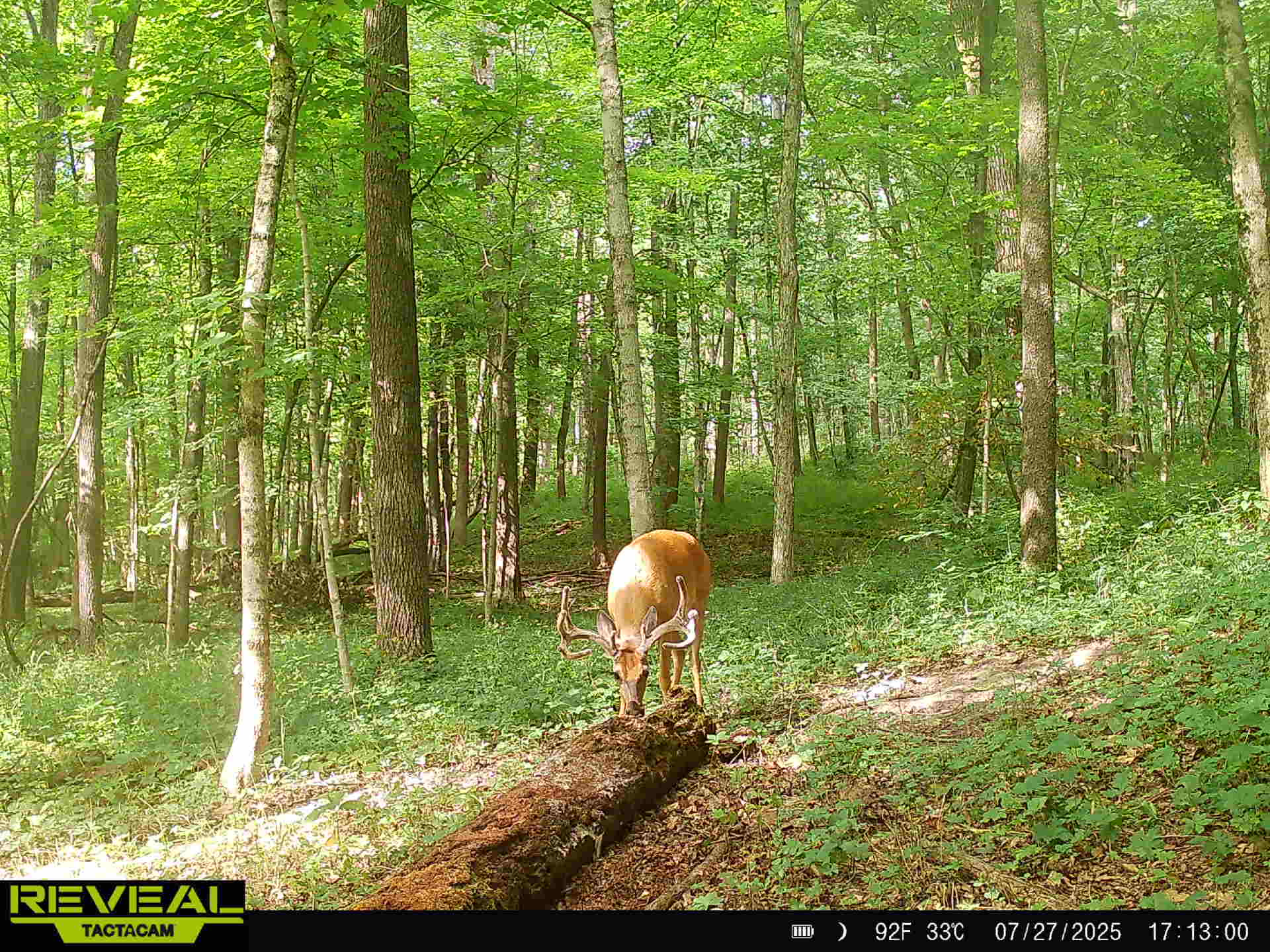
Buck visiting established mineral site - located off a main deer trail between an ag field and bedding.
Establishing the Site
Now that you have a location picked out, it is time to establish the site. Don't forget your machete, weed whip and your trail camera.
Conclusion: Playing the Long Game in Herd Management
Building a premium mineral site strategy is not a magic pill that will instantly turn a 2-year-old buck into a Boone and Crockett record holder by September. It is an investment in the foundational health of your local herd. It bridges the gap between what the soil naturally provides and what the deer biologically require during the most physically taxing months of their lives.
The true return on investment won't show up in a single season. But over three to five years, the cumulative effect of healthier does, heavier fawns, and bucks reaching their maximum genetic potential will be undeniable. There’s still time to get your sites established. Remember to always check your state's Department of Natural Resources (DNR) regulations annually before feeding.