
By: Brandon Bossenbeger
/
Reading time: 9 min.
Across the country, family-owned LLCs and limited partnerships hold some of the most underused acreage in America. Inherited farms, hunting camps passed down through three generations, timber tracts bought jointly by a group of siblings — this ground carries real value, yet it often sits idle year after year. Property taxes still come due. Maintenance still needs doing. But the land itself generates nothing, because the one thing standing between “idle asset” and “income-producing asset” is a decision none of the members want to make alone.
It’s a strange kind of stalemate. Everyone in the family agrees the land is worth keeping. Nobody disagrees that it could generate income. And yet, year after year, it doesn’t — not because the opportunity isn’t real, but because no single member wants to be the one who takes on managing a lease informally, and no formal process exists for the entity to do it together.

Base Camp Leasing works with large landholders across the aggregate, agriculture, investment, and timber industries to turn exactly this kind of underused acreage into a managed, insured, revenue-generating hunting lease. Family LLCs and partnerships face the identical problem — acreage that could be earning money but isn't — with one added wrinkle: the land doesn't belong to one owner who can simply say yes. It belongs to a family.
This article lays out why families put land into an LLC or partnership in the first place, why that land so often ends up unmonetized despite the entity's best intentions, and how a fully managed hunting lease program solves the specific problem multi-member ownership creates.
Why Families Put Land Into an LLC or Partnership in the First Place
Families rarely form an LLC or a family limited partnership on a whim. The decision almost always traces back to one of three goals.
Liability Protection
Liability Protection
Holding land as an entity, rather than in individual names, is meant to put a legal buffer between the property and each member's personal assets. If something goes wrong on the land, the thinking goes, the entity absorbs the exposure rather than any one family member.
Probate Avoidance
Probate Avoidance
Land titled to an LLC or partnership doesn't have to pass through probate court every time an owner dies. Instead, membership interests transfer according to the operating agreement, which is faster, more private, and considerably less expensive than a court-supervised estate process — especially valuable when land has been in the family for decades and will need to pass through multiple generations.
Partition Prevention
Partition Prevention
When siblings or cousins inherit land directly as tenants-in-common, any single co-owner can, in most states, force a partition sale of the entire property — even over the objections of every other owner. Moving that land into an LLC replaces individual, sellable shares of real estate with membership interests governed by an operating agreement, closing off that risk.
Some families accomplish the same goals through a family limited partnership rather than an LLC, with a general partner holding day-to-day authority on behalf of limited partners. The entity type varies, but the underlying motivation is consistent across nearly every family that goes to the trouble of formalizing land ownership: protect the asset, simplify its transfer to the next generation, and keep one disagreement from forcing the sale of land the whole family wants to keep.
All three reasons are sound. They're also entirely defensive. An LLC, FLP, or land trust protects the land and the people who own it, but nothing about the entity itself makes the land productive. That's a separate problem, and it's the one most family-held acreage never solves.
The Land Nobody Wants to Manage Alone
Here's where the pattern repeats, tract after tract, family after family: the entity gets formed, the land gets transferred, everyone breathes easier about liability and succession — and the land itself keeps sitting there, unleased and unmonetized.
The reason isn't lack of opportunity. Most of this acreage — old farm ground, timber stands, river bottoms, hunting camps — is exactly the kind of land recreational hunters actively look for. The reason is structural. In a single-owner situation, one person can post the property, screen a hunter, negotiate a price, and cash a check. In a multi-member LLC or partnership, that same simple transaction runs into questions nobody wants to be the one to answer. Who has the authority to sign a lease on the entity's behalf? What happens if one member wants to lease and another doesn't? Who's liable if a hunter gets hurt, and does the family's liability insurance even contemplate that scenario? Who collects the check, and how does it get divided fairly among members who may hold very different ownership percentages?
None of these questions are unanswerable. But they're exactly the kind of questions that cause a well-meaning family to table the conversation at Thanksgiving and never revisit it. A single managing member doesn't want to take on informal lease management as an unpaid, unofficial job — fielding calls from a hunter, chasing down a late payment, or being the one who has to explain to a cousin why the numbers looked the way they did. Other members don't want to raise the subject and look like they're pushing an agenda. So the land — and the revenue it could generate — sits untouched, sometimes for years, while taxes and upkeep quietly draw down whatever value the entity was formed to protect in the first place.
Multiply that dynamic across a few thousand acres and a decade of inaction, and the cost isn't abstract. It's the property tax bill that comes due every year regardless of whether the land earns anything. It's the deferred fence repair, the access road that needs grading, the timber stand that could be generating a hunting-lease premium instead of sitting closed to everyone but the family itself. None of that changes just because the family formed an LLC to hold the land — the entity solved the legal and estate-planning problem it was built to solve, and left the income problem exactly where it found it.
What a Managed Hunting Lease Program Actually Looks Like
This is the gap a professionally managed hunting lease program is built to close — not by asking a family to resolve every governance question itself, but by giving the entity a single outside partner who handles the parts that create friction between members.
Why This Fits Family LLCs and Partnerships Specifically
Base Camp Leasing already runs this model for institutional landholders — aggregate operators monetizing buffer zones and reclamation acreage, investment funds optimizing yield across a land portfolio, and agriculture, mining, railroad, and timber companies sitting on large non-operational tracts. Learn more about how the program works for large landholders and how the same evaluation, agent assignment, and reporting process applies here.
Family entities share the same underlying opportunity as those corporate landholders — acreage that isn't earning what it could — but they carry a governance layer those larger organizations don't: member votes, unequal ownership percentages, and personal relationships that make an unresolved disagreement about the land feel a lot more consequential than a boardroom vote. A managed program doesn't erase that governance layer. What it does is remove the operational burden that so often stalls the conversation before the family ever gets to a decision, so that the actual choice in front of members is a simple one: authorize a single, insured, professionally managed lease, or continue leaving the land — and the income it could generate — exactly where it's been sitting.
It's also worth noting how a managed lease interacts with the land itself. A documented hunting lease keeps a knowledgeable, invested presence on the property, which tends to reduce trespassing and unauthorized use — the same conservation benefit that makes Base Camp Leasing's existing landowner base value the program beyond the revenue alone. For land a family has often held for generations specifically to preserve it, that's not a minor side effect. A hunting lease member who's paid for access and knows the property has every incentive to watch over it, report anything out of place, and treat it with the same care the family does — turning what might otherwise be an unmonitored, vacant tract into ground with regular, invested eyes on it.
There's also a member-relations benefit that's easy to underestimate. Once a program is running the conversation among family members tends to shift. Instead of periodically revisiting whether the land should be leased, sold, or left alone, members are simply reviewing performance the way they would with any other shared asset — which is a far easier conversation to have at a family meeting than the open-ended one that came before it.
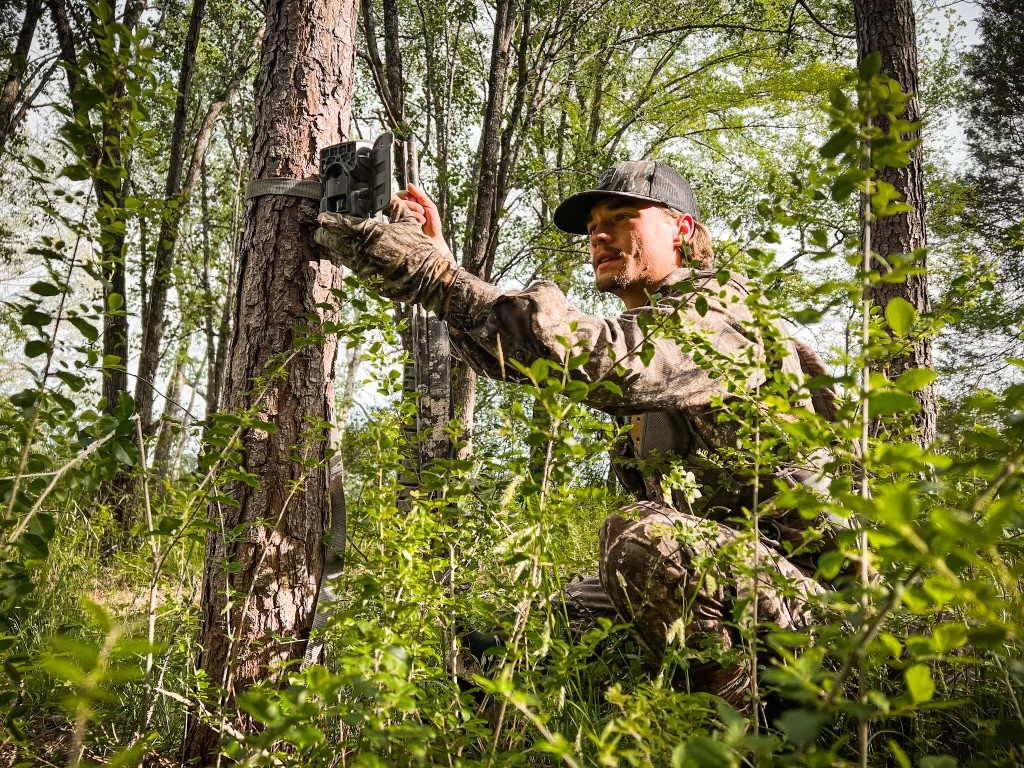
The majority of hunters use trail cameras to scout, pattern and monitor the property they are hunting. Trail cameras can act as another set of eyes to monitor any uninvited guests and trespassers.
Getting Started
If your family's LLC, partnership, or trust holds farm, ranch, timber, or recreational acreage that isn't currently generating hunting lease revenue, the first step is simply an evaluation — no cost, no obligation, and no requirement that every governance question be settled in advance. Base Camp Leasing's agents can walk a managing member or general partner through exactly what a lease on the property could look like, what the $5 million liability policy covers for the entity, and how quarterly reporting would work for your specific ownership structure.
Land that's been protected for the next generation doesn't have to sit idle in the meantime. See how leasing your hunting land works and how landowner liability and hunting lease insurance fit together, or reach out to Base Camp Leasing directly to start an evaluation for your family's land.