

By: Brandon Bossenbeger
/
Reading time: 4 min.
For dedicated deer hunters, the season doesn’t start in October—it starts right now. Late spring and early summer is prime time for hanging tree stands, clearing shooting lanes, planting food plots, and hanging trail cameras to inventory this year’s target bucks.
But while you’re keeping your eyes peeled for velvet giants, something else is waiting in the brush for you.
Summer is the peak season for ticks. Taking a casual stroll through the tall grass of your hunting lease without the right protection can quickly turn a productive weekend of prep into a medical nightmare. Don’t let Lyme disease or Alpha-gal syndrome (the meat allergy no hunter ever wants to catch) bench you before opening day.
Here is your guide to tick safety for hunters during summer deer season prep.
1. Upgrade Your Armor: Permethrin is Non-Negotiable
Standard bug sprays containing DEET are great for keeping those pesky mosquitoes away, but they aren’t enough to stop a determined deer tick from crawling up your leg. For absolute protection, you need Permethrin.
Unlike DEET, which merely repels insects, Permethrin actually kills ticks on contact.
- How to use it: Spray down your hunting clothes, socks, and boots before you head out to the woods. Let them dry completely. Liquid permethrin should not come into direct contact with your skin while wet. Once it is completely dry, the chemical tightly binds to the fabric fibers, making it safe to wear—even when you sweat during hot summer days.
- Treat Outdoors Only: Always hang your hunting clothes, socks, and boots outside to spray them. Never spray them indoors or while you are actively wearing them.
- Why it rules: A proper treatment can last through several washes, giving you weeks of invisible armor while you work.
- Pro-Tip: Ticks typically latch onto your boots or ankles first and crawl upward. Give your boots, socks, and lower pant legs an extra-heavy coat.
2. Dress for the Heat, but Cover Up
We get it—it’s 85 degrees and humid out there. The temptation to wear shorts and a t-shirt while hanging cameras and clearing lanes with a polesaw is real. Resist it.
When working in the woods, stick to lightweight, breathable long-sleeve shirts and pants.
- Tuck your pants into your boots: It might look a little goofy, but creating a solid physical barrier keeps ticks on the outside of your clothes where they can be spotted.
- Wear light colors: It’s much easier to spot a tiny, dark deer tick hitching a ride on light tan or grey clothing than it is on dark camo. Save the heavy camo patterns for the fall.
3. Understand the Enemy
Knowing what you are up against is half the battle. While lone star ticks and wood ticks are common, the blacklegged tick (deer tick) is the primary culprit behind Lyme disease. In the summer months, you aren’t just looking for adult ticks; you are also dealing with nymphs, which can be as small as a poppy seed.
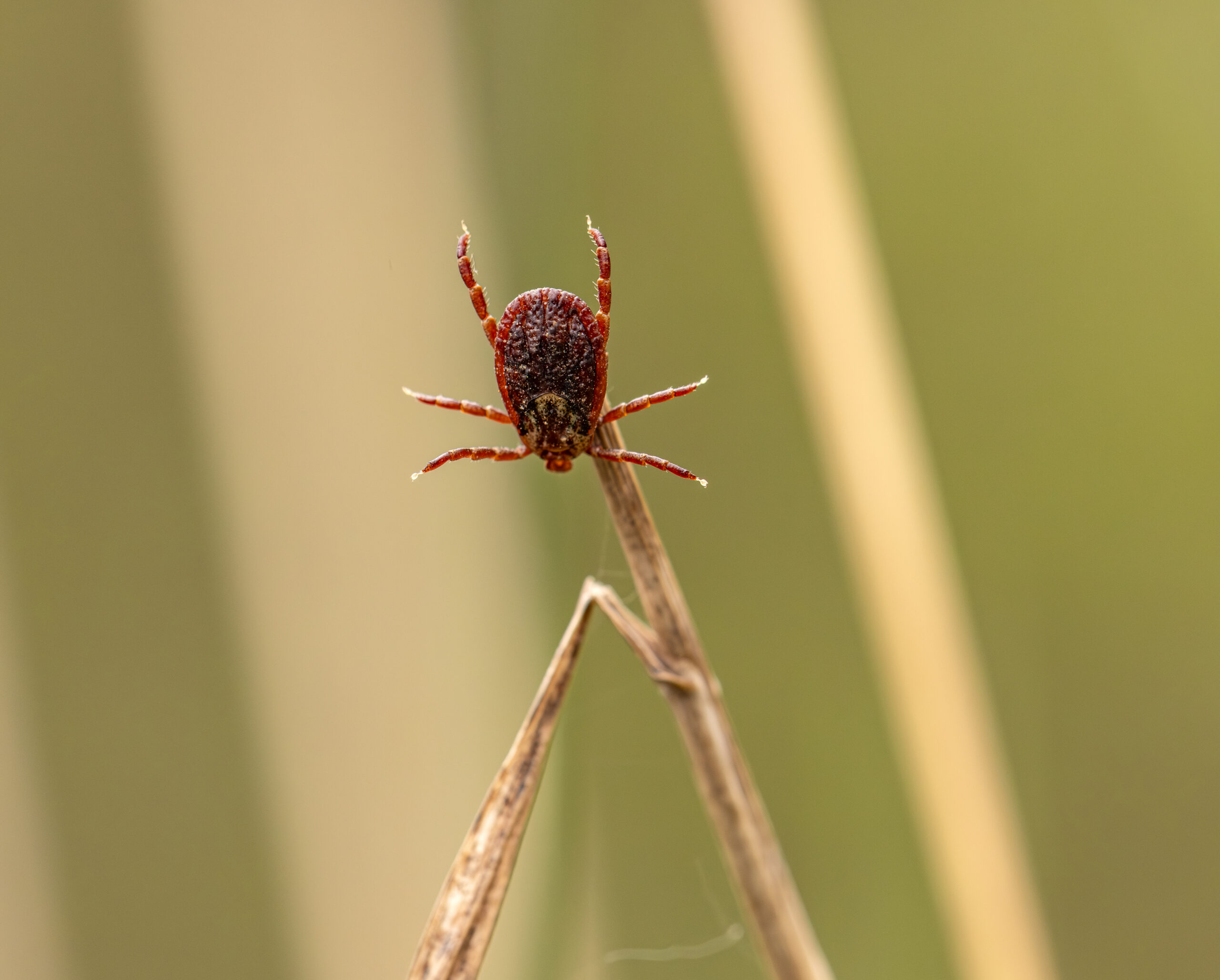
A female wood tick crawling on overgrown grass – ticks love high-humidity spots in fields, overgrown meadows, and leaf litter, which act as perfect reservoirs to keep them from drying out.
4. Establish a Post-Work Routine
Your tick safety protocol shouldn’t stop when you pack up the truck. Make these three steps standard practice every time you finish working on your lease:
- The Tumble Dry Trick: As soon as you get home, throw your work clothes directly into the dryer on high heat for 10 to 15 minutes. Dry heat kills ticks instantly. If your clothes are muddy and need a wash first, make sure they hit the hot cycle afterward.
- Take a Quick Shower: Jumping in the shower within two hours of coming indoors helps wash off any loose, unattached ticks that are still looking for a place to bite.
- The Full-Body Check: Stand in front of a mirror and inspect yourself thoroughly. Pay close attention to the spots ticks love most: behind the knees, around the waist, in the armpits, and along your hairline.
What to Do If You Find an Attached Tick
Don’t panic, and do not try to burn it off with a match or smother it with petroleum jelly. Grab a pair of fine-tipped tweezers, grasp the tick as close to your skin’s surface as possible, and pull upward with steady, even pressure. Clean the bite area with rubbing alcohol, and keep an eye out for a bullseye rash or flu-like symptoms over the next few weeks.
Protect Yourself for the Season Ahead
The work you put in during the summer often determines the success of your fall hunting season. Hanging stands, checking cameras, and improving habitat are all worthwhile investments—but none of it matters if a preventable tick-borne illness keeps you out of the woods. By treating your clothing with permethrin, covering exposed skin, and following a consistent “post-woods work” routine, you can stay focused on what matters most: preparing for the season ahead. Protect yourself now, and you’ll be ready when that first cool October morning finally arrives.