
By: Brandon Bossenbeger
/
Reading time: 9 min.
There’s no single kind of absentee landowner. Some bought rural acreage on purpose, treating it like any other line in an investment portfolio. Others inherited a family farm or hunting camp they’ve never once spent the night on. Some own a second home two states away that they visit for six weeks a year. Others simply moved — for a job, for family, for retirement — and left a piece of ground behind that they still legally own but no longer live near.
What all of these owners share is the same underlying condition: nobody is physically there most of the time. That single fact changes almost everything about how the land needs to be managed, protected, and turned into something that pays for itself instead of just costing money.
This guide is the front door to everything Base Camp Leasing has published on absentee ownership. If you’re new to owning land you can’t watch every day, start here — then follow the links throughout to the deeper, more specific reads on protecting your investment, understanding your liability, and insurance.
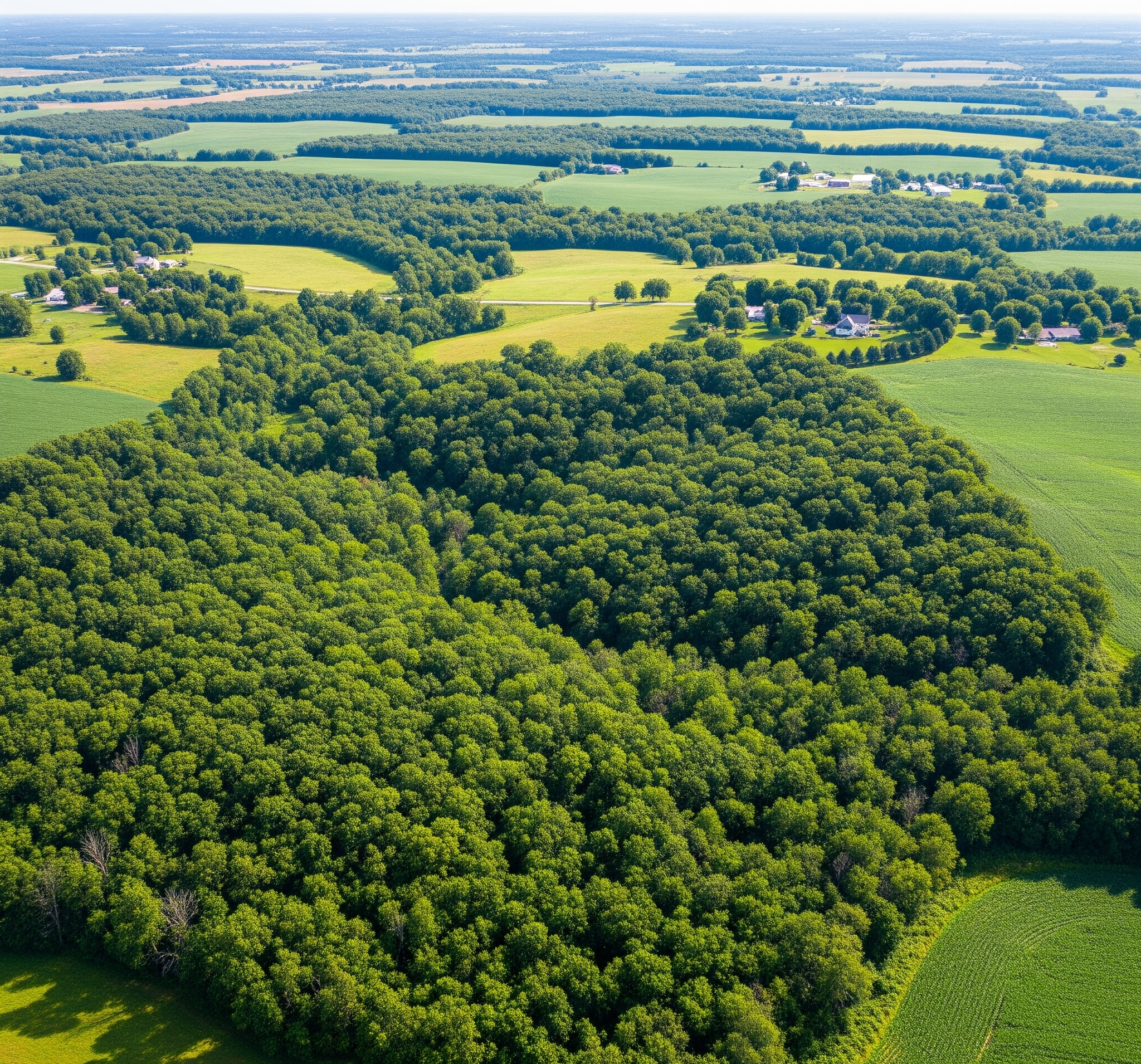
Timber, agriculture and hunting leases can make you money.
Every Absentee Landowner Got Here a Different Way
Before getting into protection and profit, it's worth naming the paths that lead to absentee ownership, because the "right" strategy often depends on how you got there.
The deliberate investor: Some owners buy farm or timber acreage specifically to diversify a portfolio, the same way they'd buy a rental property or a stock position. For this group, Base Camp Leasing's timber investor resource covers how a hunting lease adds a second income stream on top of row crops, CRP payments, or timber growth.
The heir: A large share of rural land in this country changes hands not through a purchase, but through inheritance. If that describes you, you may have picked up 40, 400, or 4,000 acres you've barely walked, with no existing plan for how to manage it from wherever you actually live.
The second-home or retirement buyer: Snowbirds and soon-to-be retirees often buy land in another state years before they move there full time, or split their year between two properties indefinitely. That land sits empty for months at a stretch.
The relocator: Sometimes the land doesn't change hands at all — the owner does. A job transfer, a family move, or a life change turns a property you used to visit weekly into one you now see once or twice a year.
Trusts, LLCs, and institutional holders: Not every absentee owner is a person. A trust, an LLC, or a fund can own thousands of acres with no single individual assigned to check on any given tract. The paperwork looks different, but the underlying problem — nobody physically present — is identical to what an individual owner faces.
None of these categories are mutually exclusive, and the goal changes depending on which one (or combination) describes you. An heir may just want the land to stop costing money. A deliberate investor wants to maximize return. A retiree splitting time between two homes wants peace of mind more than anything else. But the toolkit for solving the underlying problem — protecting land you can't watch, and getting it to pay for itself — is largely the same across all of them.
Base Camp Leasing has long recognized this range of owners. As the company's own landowner persona breakdown puts it, "leasing is equally ideal for absentee landowners," regardless of which of these paths brought you to ownership. Whatever got you here, the same open question follows: how do you protect land you can't personally watch, and how do you make it earn its keep while you're gone?
The Trade-Off Every Absentee Owner Faces
Land that nobody visits regularly starts to look — and be treated — like it belongs to no one in particular. Base Camp Leasing's own content on trespasser liability opens with a blunt admission that applies to every owner in this position: "we as landowners aren't always living on this land or are able to keep an eye on it like we would our own backyard." That single fact is the root of nearly every risk absentee owners face.
Left unmanaged, unwatched acreage tends to accumulate the same set of problems. Trespassers — hunters, hikers, off-roaders, or worse — treat unposted, unmonitored land as functionally public. Storm damage, downed fences, or a burst water line can go unnoticed for weeks. Vandalism and dumping happen more often on properties where no one seems to be watching. And because an injured trespasser can sue for medical costs regardless of whether they had permission to be there, every one of those scenarios carries real legal exposure. The full breakdown of that liability — including how to mark boundaries, post signage, and what to do if someone is hurt on your land — is worth reading in full if you haven't already.
None of this means owning land from a distance is a losing proposition. It means an absentee owner needs a deliberate plan for presence, monitoring, and coverage that a hands-on owner might be able to skip.
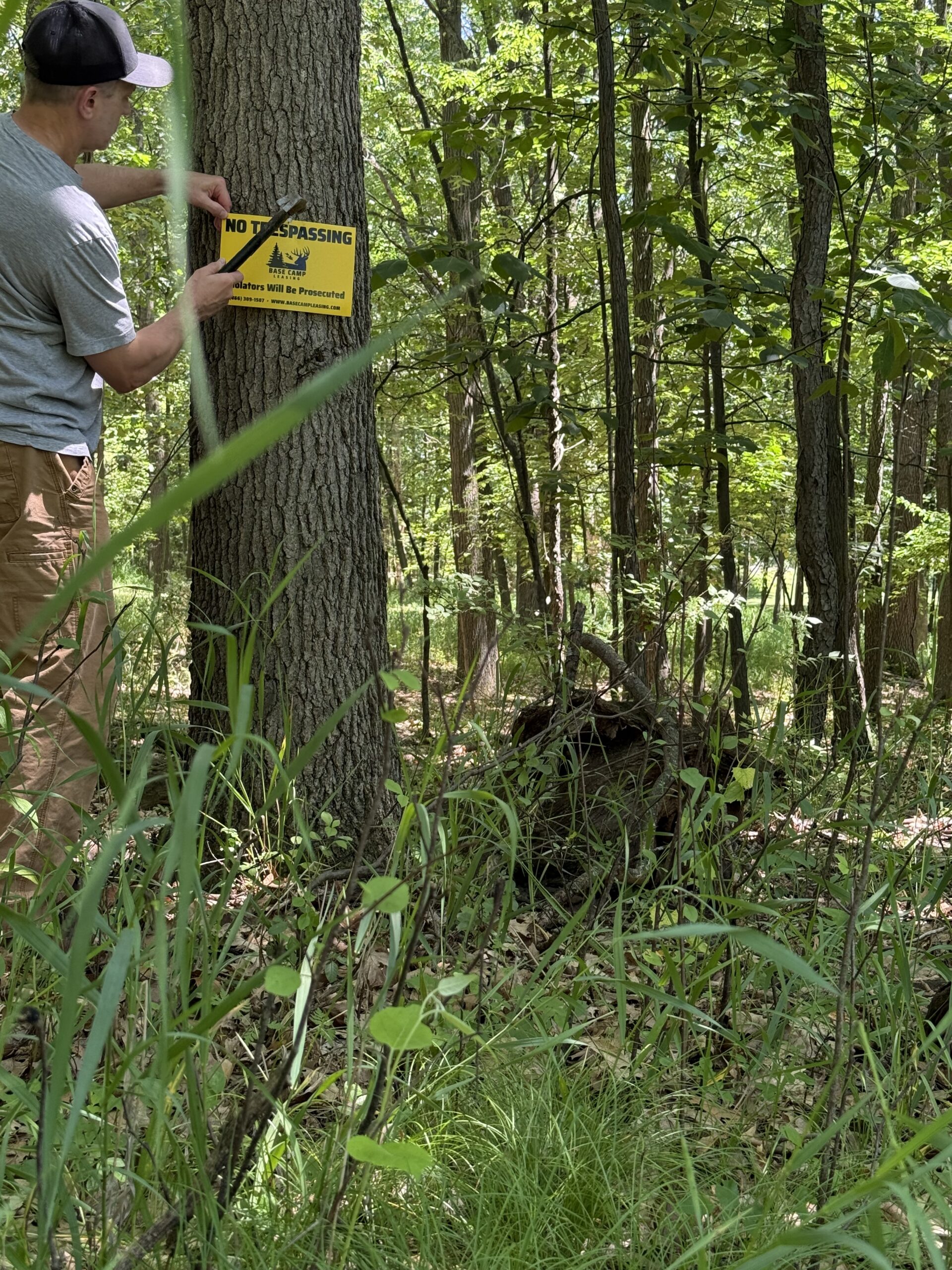
Private landowner posting his property with Base Camp Leasing posted signs.
Protecting Your Investment When You Aren't There
Base Camp Leasing has written about this challenge before, in two separate posts published a couple of years apart: Absentee Landowner? Protect Your Investment and Absentee Landowner? Protect Your Land Investment from Afar. Both are worth reading as supporting material, and between them they cover most of the practical ground: hunting leases, trail cameras, farmland leases, CRP enrollment, and the basic math of how leasing income offsets the cost of owning property you rarely see.
The short version of both posts is this: a hunting lease is the single most effective low-cost tool an absentee owner has, because it solves two problems with one arrangement. First, it puts a paying tenant with a vested interest in the property's condition on the land during the season, which means someone besides you is watching for trespassers, storm damage, and anything else out of place. Second, it generates income — often enough to cover property taxes outright — without requiring you to do any of the work yourself.
Trail cameras extend that presence even when the lessee isn't physically on-site. Many cellular models upload photos to the cloud in real time, giving an owner two states away the same visibility into deer movement, vehicle traffic, or trespassing activity that a next-door neighbor would have. And for owners with farmable acreage, a farmland lease can run alongside a hunting lease on the same property, since the two are typically negotiated and paid separately — meaning it's possible to generate income from both the tillable ground and the hunting rights at once.
Insurance and Liability: Closing the Gaps a Waiver Can't
A hunting lease agreement with a liability waiver helps, but it doesn't cover every scenario. A neighbor injured near a property line, a hunter's family member who was never a signatory, or an incident a homeowner's policy simply excludes — these are exactly the gaps that landowner liability hunting lease insurance is built to close. A strong policy covers legal defense, bodily injury, property damage, and guest liability, and it should be paired with a clearly written lease agreement that spells out who's allowed on the property, what they're allowed to do, and who's responsible if something goes wrong.
For an absentee owner specifically, this combination — a paying lessee providing on-site presence, plus a real insurance policy backing up the arrangement — does more to reduce risk than distance-driven anxiety about "checking in" ever will. You can't be there every week. The lease and the coverage can be.
Turning Distance Into Income
Protection is half the picture. The other half is making the land pay for itself, or better, while you're not the one working it.
For owners sitting on rural acreage purely as an investment, the benefits of owning rural land go well beyond appreciation. Timber, farmland leases, and hunting leases are three separate, stackable income streams that don't require the owner to live nearby or do the physical work. For timber-focused investors specifically, Base Camp Leasing's timber investor page walks through how a hunting lease layers passive recreational income on top of a standard timber growth strategy.
That same logic scales up. Institutional owners — TIMOs, REITs, and other large timberland holders — are managing the exact same "nobody is physically there" problem across thousands of acres at once. As Base Camp Leasing's institutional timberland piece lays out, a documented hunting licensing program can offset carrying costs, improve exit valuation, and add a layer of boots-on-the-ground security that would otherwise cost real money in private patrols. Whether you own 40 acres or 40,000, the underlying principle is identical: a lease turns unmonitored land into monitored, income-producing land.
You're Not the Only One Doing This From a Distance
If part of the hesitation around leasing is a sense that your situation is unusual — too far away, too little time on the property, too hands-off — it's worth knowing you're solidly in the majority of Base Camp Leasing's landowner base. Individuals, families, trusts, LLCs, and institutional holders alike all lease through the same process, and as the different landowners breakdown notes, hunters provide absentee owners in particular with "extra sets of eyes" precisely because those owners aren't on the property as often as others might be. Distance isn't a disqualifier. If anything, it's the exact situation a hunting lease is built for.
Where to Go From Here
If you're evaluating whether your land is a fit for a hunting lease, Base Camp Leasing's absentee landowner page is the place to check eligibility and request a free quote, and the main landowner hub covers the broader process, insurance, and referral program in more depth.
For a deeper look at specific risks and decisions unique to absentee ownership — squatters and adverse possession, vacant land insurance, remote monitoring technology, and the caretaker-versus-lease question — keep an eye on the Base Camp Leasing blog in the coming weeks. This guide is the starting point; those posts will go further into the questions that come up once you've decided distance shouldn't stop you from protecting, and profiting from, land you don't live on.
For general reference on hunting lease structure and coverage, the American Hunting Lease Association's guide to hunting lease insurance and its hunting lease agreement resource are useful outside reads as you put your own plan together.