
By: Brandon Bossenbeger
/
Reading time: 10 min.
Quick answer: The biggest risks of owning land you don’t live on are trespassing nobody sees, liability that applies whether or not you’re there, storm damage that goes unnoticed for months, and dumping or vandalism that grows when no one is watching. Distance doesn’t create these problems; it delays when you find out about them. Absentee landowners reduce the risk with a regular check-in routine, clear posting, an honest insurance review and trusted, named people on the ground.
Picture an owner in Chicago with 120 inherited acres in southern Iowa. She visits once a year and assumes the land is fine. Then a neighbor calls in October: someone has been driving through the back gate all summer.
Nothing about the land changed when she moved away. What changed is how long a problem can run before she hears about it. That delay is the core challenge for every absentee landowner.
Owning land you don’t work or live on is common. The 2024 USDA TOTAL survey, released by USDA NASS in March 2026, found that non-operating landlords own about 276.1 million acres, or 79% of all rented U.S. farmland. The same survey reports that about 227 million acres are expected to pass through a will or trust, which means many more heirs will own land far from where they live.
Base Camp Leasing’s complete guide for absentee landowners covers the big picture; this article focuses on the risks that grow with distance.
What Are the Real Risks of Owning Land You Don’t Live On?
The real risks of owning land you don’t live on are trespassing, liability, storm damage and vandalism, with squatters and insurance gaps building on top of those four. The table shows why each gets worse with distance and how to reduce it.
| Risk | Why distance makes it worse | Ways to reduce the risk |
|---|---|---|
| Trespassing | Strangers can use the land all season before anyone reports it | Post the boundary, lock gates, keep named people on the land |
| Landowner liability | Claims and legal notices go to an address that may not get checked often | Review coverage with a licensed insurance agent; keep your mailing address current |
| Storm and weather damage | Downed timber, washouts and broken fences can sit for months | Schedule a property check after major storms; work with a local forester for timber |
| Dumping and vandalism | Cut locks and trash signal that nobody is watching, which invites more | Replace locks and signs quickly; document damage with photos and dates |
| Squatters and adverse possession | Long, open, unchallenged use is the pattern adverse possession laws look for | Show active use and ownership; ask a real estate attorney in that state about local rules |
| Insurance gaps | Coverage that fit when the land was used may not fit when it sits vacant | Revisit coverage any time the land’s use changes |
Can People Trespass on My Land Without Me Ever Knowing?
Yes. On vacant rural land, trespassers can use the property for an entire season before the owner hears about it. A truck at the gate that a resident would spot the same day may never be noticed at all.
Common trespassers on out-of-state land include unauthorized hunters, ATV riders and weekend campers. Repeated use tears up gates and fencing, ruts field edges, pushes wildlife off the property and creates exposure to injury claims. Base Camp Leasing’s post on what you can do to deter trespassers lists practical steps such as perimeter signs, locked gates and checking the property at random times.
Am I Liable If Someone Gets Hurt on Land I Don’t Live On?
Possibly. Landowner liability is tied to ownership, not presence, so an injury on your land can lead to a claim even if you didn’t know anyone was there. Your protection depends on state law, land use and your coverage.
The National Agricultural Law Center notes that every state has a recreational use statute that can protect qualifying landowners when people use their land for activities like hunting, fishing and hiking. Those protections have limits. The same source explains that accepting money for use of the land can suspend the protection, and that landowners generally must warn known frequent trespassers of dangers on the property.
For absentee owners, land you never visit can carry hazards you don’t know about, such as an old well or a washed-out road, and a legal notice may sit unopened at an address you rarely check.
If you lease the land for hunting, know what the lease coverage does and doesn’t do. Every Base Camp Leasing lease includes a $5 million liability insurance policy that covers the hunters, who are Base Camp Hunt Club members. It is not the landowner’s own policy and it doesn’t replace vacant land insurance. Review your own coverage with a licensed insurance agent, and ask a real estate attorney licensed in your land’s state how the recreational use statute applies there.
How Long Can Storm Damage Go Unnoticed on Vacant Rural Land?
On land visited once or twice a year, storm damage can go unnoticed for months. A spring windstorm may not be discovered until a fall visit, when the damage has often become expensive.
Timber shows the cost of waiting most clearly. A storm-salvage guide from the University of Arkansas at Monticello’s Arkansas Center for Forest Business gives a 3–4 week window to harvest storm-damaged pine sawtimber and 4–6 weeks for veneer and appearance-grade logs before stain and insects cut their value. Lower-value products such as pulpwood have a longer window of 8–12 months.
Farm and recreational acreage face their own version of the problem. Washed-out culverts can cut off access entirely, fallen limbs can flatten fence lines, and erosion can cut into pond dams and drainage ditches. A long-distance landowner can’t stop storms, but can plan who gets onto the property after a major weather event, such as a consulting forester, a trusted neighbor or a farm tenant.
Why Does Unwatched Land Attract Dumping and Vandalism?
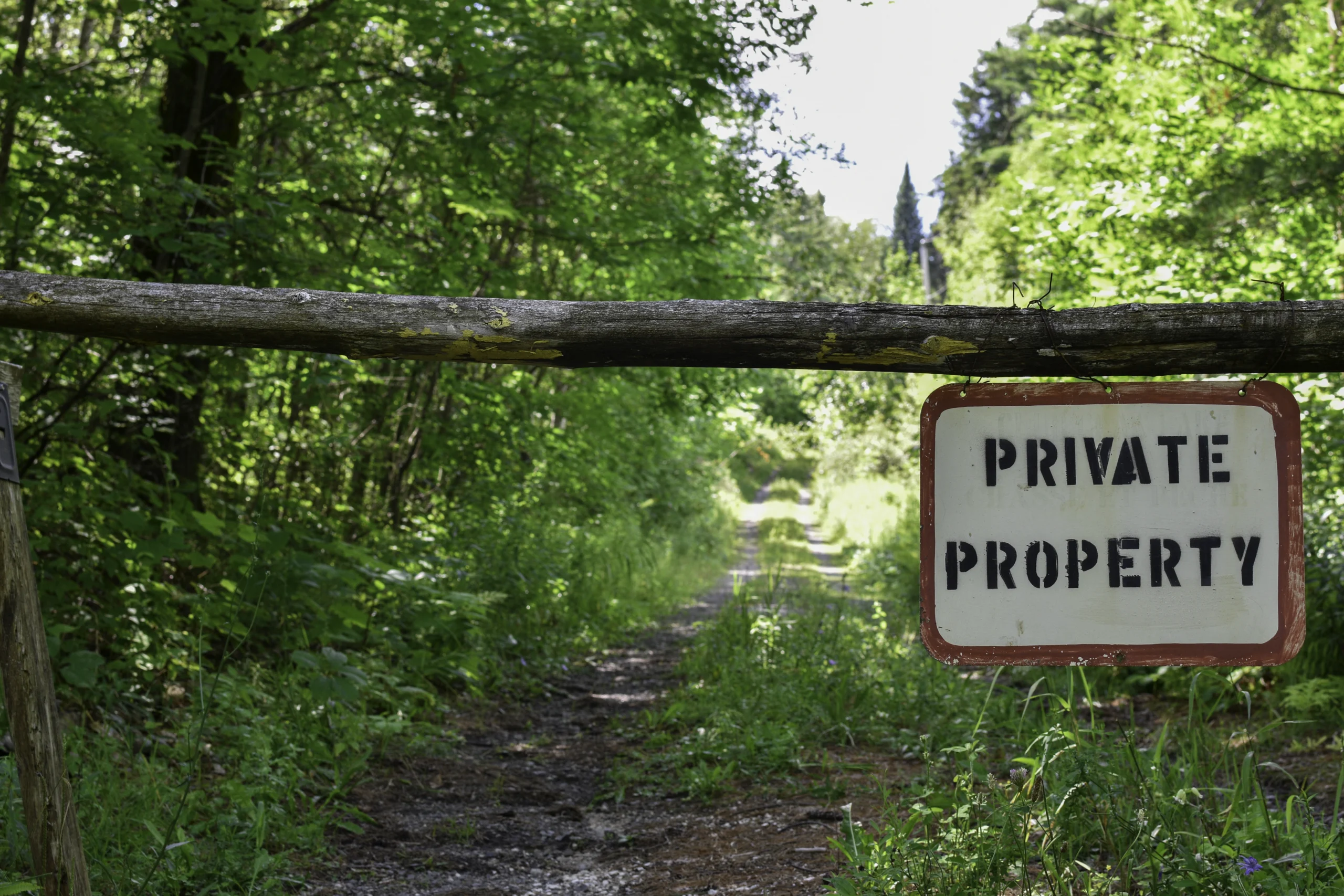
Unwatched land attracts dumping and vandalism because early damage that goes unrepaired tells others nobody is paying attention. A cut lock left hanging for a month reads as an open invitation. Each new visitor tends to push a little further than the last.
Typical problems include:
- Illegal dumping of tires, appliances and household trash
- Cut locks, broken gates and removed "No Trespassing" signs
- Informal campsites with fire rings and debris left behind
The fix is speed. Replace locks and signs quickly, photograph damage with dates and report illegal dumping to the county.
Which Absentee Risks Deserve a Closer Look?
Squatters and vacant land insurance deserve a closer look, and each gets its own guide in this series.
Squatters and adverse possession. In some states, a person who openly occupies land long enough without permission may be able to claim title. Time periods and conditions vary widely by state, so ask a real estate attorney licensed where the land is located.
Vacant land insurance. Land that isn't leased, farmed or occupied may need different coverage than land that is. A licensed insurance agent can review it with you.
How Do Absentee Landowners Protect Land They Don't Live On?
Absentee landowners protect land they don't live on with a simple system. These five steps cover most of the risks above.
- Set a check-in rhythm. Put visits, calls with a local contact and post-storm checks on the calendar so no problem runs unnoticed for long.
- Put named people on the ground. A neighbor, farm tenant or hunter group you know by name is worth more than any gadget. Owners who inherit land often start with no local contacts, so building one comes first.
- Post and maintain the boundary. Visible signs deter casual trespassing and show active ownership. Check and refresh them on every visit.
- Review insurance when use changes. A lease starting or ending, a new structure or a stretch of vacancy are all reasons to call your licensed insurance agent.
- Lease the hunting rights. A hunting lease puts a known group of people on the land who have a reason to keep trespassers out.
How a Hunting Lease Helps a Long-Distance Landowner
A hunting lease is a protection step that pays the owner. On a Base Camp Leasing lease, every person allowed on the property is named in the lease agreement, and there is a maximum number of hunters. The hunters help post and monitor the property, and on most leases they can press charges against trespassers so the landowner doesn't have to.
The owner keeps 100% control of the land and full access to it during the lease. There is no out-of-pocket cost, and the landowner is paid upfront. Income depends on the land: as published examples, a smaller property in a high-demand area with excellent habitat might lease for $30 to $70 per acre, while a large tract in a lower-demand area might lease for $10 to $60 per acre. Rates vary by location, habitat and demand.
A hunting lease doesn't guarantee nothing will happen to the land or prevent squatters on its own, but it can help reduce the risk by showing the land is in active use. If the land is cash-rented for farming, check the existing farm lease first to confirm who holds the hunting rights. For more on the approach, read how absentee landowners protect their land investment from afar and how to lease your hunting land.
A Year-Round Checklist for Managing Land From a Distance
- January–March: Confirm your mailing address and tax due dates with the county treasurer or assessor. Review insurance at renewal.
- April–June: Schedule a property check after spring storms. Refresh signs, locks and gates.
- July–September: Confirm who will be on the land this fall. If a hunting lease is ending, remember that a Base Camp Leasing lease requires 60 days' written notice before it expires.
- October–December: Check in with your local contact during season and plan next year's visits.
Frequently Asked Questions About the Risks of Owning Land You Don't Live On
Is it a bad idea to own land in another state?
No. Many landowners own land they don't live on or farm themselves. Out-of-state land simply needs more planning: a check-in routine, local contacts, current insurance and a mailing address the county can reach.
How often should I check on land I don't live on?
There is no single rule, but a set schedule plus an extra check after major storms works for most long-distance landowners. Even a monthly call with a local contact helps.
Does vacant land need its own insurance?
It may. Land that sits unused can need different coverage than leased or occupied land. A licensed insurance agent in the land's state can review your current policy and explain your options.
Can I still visit my land if it has a hunting lease?
Yes. Base Camp Leasing landowners keep 100% control of their land and full access to it during the lease. Owners are asked to be mindful of when hunters are on the property.
Who can watch my land if I don't know anyone nearby?
Options include a neighboring landowner, a farm tenant, a consulting forester or a hunting lease group. A hunting lease puts named people on the land quickly.
Keep Distance From Turning Into Damage
The risks of owning land you don't live on are real but manageable. Each one grows with time, and a simple routine with named people on the ground shortens that time. For anything involving liability, insurance, adverse possession or contracts, talk with a licensed insurance agent or a real estate attorney in the state where your land is located.
Ready to put trusted hunters on land you can't watch yourself? Get a free hunting lease quote for land you don't live on from Base Camp Leasing.
I really enjoyed the way you explained this topic without making it unnecessarily complicated. I am looking forward to seeing what subject you decide to cover next.
I am impressed by how much useful detail you fit into an easy read. Thank you for making the information welcoming for beginners.