
By: Brandon Bossenbeger
/
Reading time: 10 min.
Quick answer:
Leasing farmland for hunting lets a farm owner earn a second income from the same ground without taking any acres out of production. The hunting rights are separate from the farming rights, so crops, cattle and cash rent keep going. Base Camp Leasing lists farms at no out-of-pocket cost and includes a $5 million liability policy on every lease.
Most farm owners know what their ground brings in from crops or cattle. Fewer have ever put a number on the hunting rights. On a lot of farms, those rights sit there doing nothing while deer walk the fence rows, bed in the timber and eat the beans every night.
Here’s how leasing farmland for hunting works, what it can be worth, and how Base Camp Leasing handles the leasing side for farm owners.
Can You Lease the Hunting Rights on Farmland You Already Farm or Rent Out?
Yes, in many cases a farm owner can lease the hunting rights on ground that is already farmed or cash-rented. A farm lease covers the right to grow crops or graze livestock. Hunting rights are a different right, and they can be leased on their own.
Check your farm lease first. If someone else farms your ground, read your farm lease to confirm who holds the hunting rights before you lease them. Some farm leases give hunting rights to the tenant, and some don’t mention them at all. If the lease is unclear, talk with your tenant and an agricultural attorney first. It’s also good practice to let your tenant know a hunting lease is coming so nobody’s surprised in November.
A Base Camp Leasing hunting lease covers hunting rights only, not farming rights. The crops keep growing, the cattle keep grazing, and the property pays you a second time.
Farm Lease vs. Hunting Lease: What Each One Covers
| Farm Lease (Cash Rent or Crop Share) | Hunting Lease Through Base Camp Leasing | |
|---|---|---|
| What’s leased | The right to farm or graze | Hunting rights only |
| Main acres used | Tillable ground, hay ground or pasture | Timber, draws, creek bottoms, fence rows and field edges |
| Main season | Spring planting through fall harvest | Fall and winter hunting seasons |
| Who sets the price | Owner and tenant | A local Base Camp Leasing agent, based on local going rates |
| Cost to the owner | Set by your agreement | No out-of-pocket cost; commission paid once leased |
| Liability | Your farm lease and farm insurance | $5 million liability policy included on every lease |
| Term | Set in your farm lease | 1 year from the deposit date, unless specified otherwise |
What Parts of a Farm Do Hunters Actually Use?
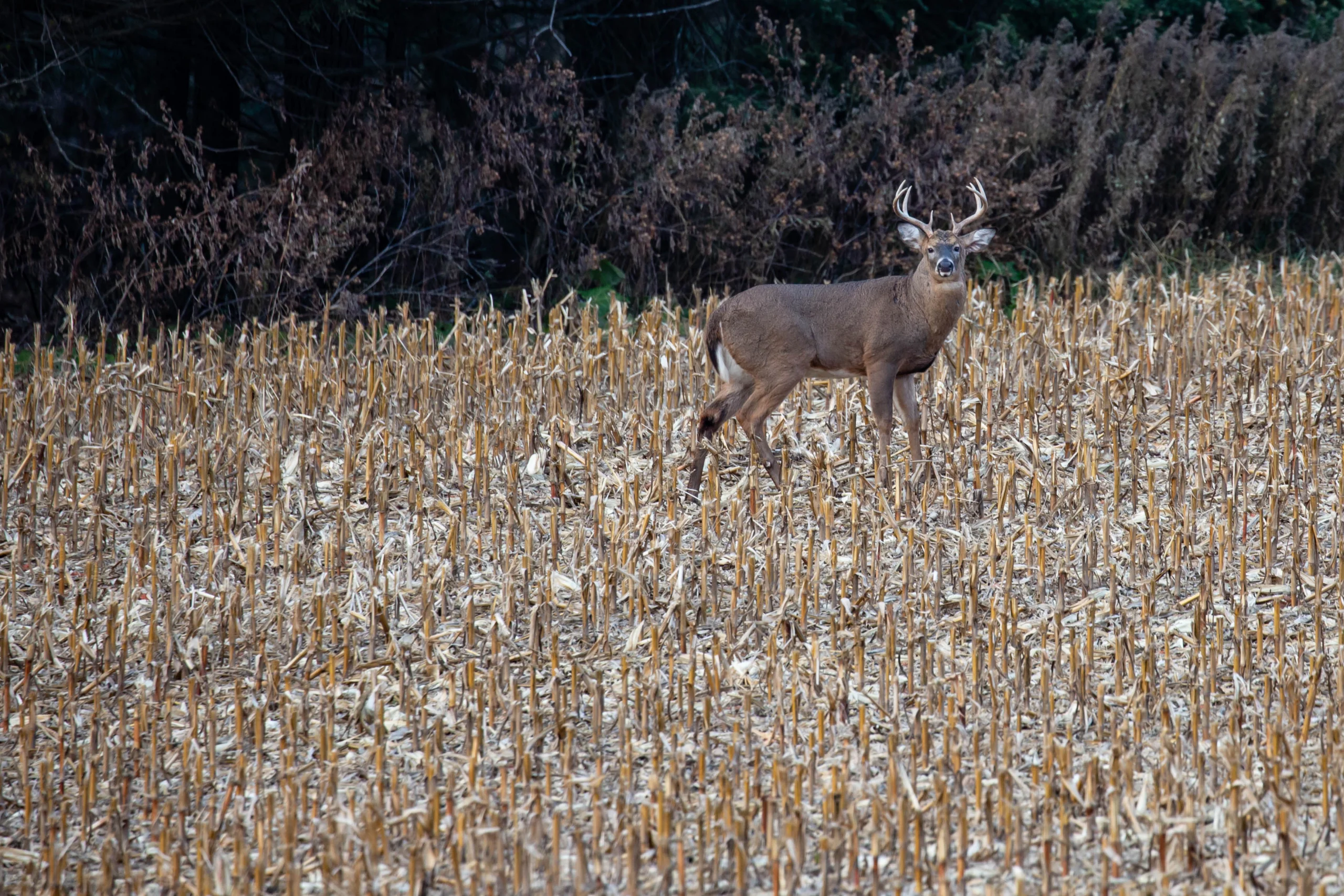
Hunters mostly use the parts of a farm that aren’t being farmed. A hunting lease doesn’t take any ground out of production. The acres that hold deer, turkey and waterfowl are usually:
- Timber, woodlots and wooded draws
- Creek bottoms and drainage ditches
- Fence rows, field edges and brushy corners
- CRP ground, waterways and other set-aside acres
- Pasture edges and ponds
Put that cover next to crop fields that wildlife already feed in, and a working farm can be some of the best hunting ground in the county. Most hunting seasons run in the fall and winter, after the busiest part of the farming year is wrapping up. Clear lease terms keep the two uses from getting in each other’s way.
How Much Can a Hunting Lease on Farmland Pay?
A hunting lease on farmland pays based on location, habitat and hunter demand, and there is no single national rate. Base Camp Leasing has published these per-acre examples:
- A smaller property in a high-demand area with excellent habitat might lease for $30 to $70 an acre.
- A large tract in a lower-demand area might lease for $10 to $60 an acre.
Smaller tracts usually lease for more per acre, while larger tracts lease for more in total. The price is for the whole property, not per hunter, up to the maximum number of hunters allowed. What your farm brings depends on:
- Location and demand. Hunters pay more in areas known for big deer or good bird hunting.
- Timber, food and water. Mature timber, brushy cover, crop fields, ponds and creeks all help hold game.
- Terrain, access and game population. How the farm lays out and how much wildlife it and its neighbors hold.
- Lease terms. The number of hunters, species allowed and freedom to make improvements.
A local Base Camp Leasing agent prices each farm individually, based on what similar ground in your area leases for. Base Camp Leasing doesn’t rely on online lease calculators, because they use a generic equation that isn’t specific to your property.
A 160-Acre Farm Example
Picture a 160-acre farm with 120 tillable acres cash-rented to a neighbor and 40 acres of timbered draws and a creek bottom. The neighbor keeps paying cash rent on the 120 tillable acres. If the whole property leased for hunting in the $10-to-$50-per-acre example range, that would add $1,600 to $8,000 a year on top of the farm income.
That’s an illustration, not a promise. Actual rates vary by location, habitat and demand, and your agent sets the final price. If you run cattle, the cattle stay too. The hunting lease is its own income line.
How Does Leasing Farmland for Hunting Through Base Camp Leasing Work?
With Base Camp Leasing, you don’t have to find hunters, write a contract or chase down payments yourself. The process looks like this:
- Submit your property information online: your name, contact info, name on the deed, state, county, acreage and a short description of the farm.
- Your local agent evaluates the property digitally. A Base Camp Leasing agent uses the county GIS mapping system to look at water, timber, topography and neighboring land, along with your description.
- You get a preliminary estimate of annual lease income. Initial quotes commonly align closely with the final price.
- The agent inspects the farm when it’s first listed, and listing photos usually come from that visit.
- Base Camp Leasing markets the lease to its hunter database, and you are paid upfront.
See the full process for leasing your hunting land for more detail.
What Does Base Camp Leasing Handle for Farm Owners?
Base Camp Leasing handles nearly all of the leasing work, which matters to a farm owner who already has plenty to do. Base Camp Leasing has been in business since 1999 and has paid more than $80 million to landowners.
- No out-of-pocket cost. It costs nothing to list your farm. Base Camp Leasing is paid a commission once the property is leased.
- Liability coverage. A $5 million liability insurance policy is included on every lease and covers the landowner and the hunters, who are Base Camp Hunt Club members.
- A professional lease agreement. Base Camp Leasing provides a hunting lease agreement that sets boundaries and expectations, so you’re not drafting your own.
- Marketing and payment. Base Camp Leasing markets the property to its hunter database and handles the financial logistics. You are paid upfront.
- A local agent. You work with a field agent who knows your area and is a hunter themselves.
How Do You Keep a Hunting Lease and a Working Farm Running Together?
A hunting lease and a working farm run smoothly when everyone knows the ground rules up front. Lease terms and named hunters keep the hunting side separate from the farming side.
- You keep full access. Landowners keep 100% control of their land and full access to it during the lease. Base Camp Leasing asks landowners to be mindful of when hunters are on the property, since hunters are paying for time in the woods.
- Only named hunters are allowed. Everyone on the property must be named on the lease, up to a set maximum number of hunters. Guests aren’t allowed, and anyone not listed is a trespasser.
- You know who’s there. Once the property is leased, you receive the hunters’ contact information.
- Hunters help watch the property. Hunters post the boundaries and monitor the land. On most Base Camp Leasing leases, hunters have the authority to press charges against trespassers, so you don’t have to handle it.
When you visit with your agent, bring up anything hunters need to know: when harvest usually wraps up, which gates stay closed, where cattle are pastured, which lanes the equipment uses, and any fields that are off-limits.
If you ever want to end the hunting lease, give 60 days’ written notice before the lease expires. Hunters have first right to renew only if you approve.
What Other Benefits Do Farmers Get From a Hunting Lease?
The lease payment is the main reason most farm owners lease their hunting rights, but it isn’t the only one.
- Less crop damage. Deer can do real damage to corn, soybeans and hay. Hunters on the property each season help keep the herd in check. Our farmland guide to reducing deer crop damage covers this in more depth.
- Another set of eyes. Hunters are on the property in the fall and winter, often when you or your tenant aren’t. They tend to notice a downed fence, a washed-out crossing or signs that someone’s been where they shouldn’t be.
Does a Hunting Lease Work on Cattle and Pasture Ground?
Yes, a hunting lease works on cattle and pasture ground as well as row crop farms. Pasture, hay ground and cattle operations often have the timber, water and edge cover that hold deer and turkey. Our guide to leasing cattle land explains how a grazing lease and a hunting lease can run side by side on the same property.
How Is Farm Rental Income Reported for Taxes?
Farm rental income is reported differently depending on how you’re paid. The IRS says landowners who don’t materially participate in the farm use Form 4835 to report farm rental income based on crops or livestock produced by the tenant, which covers crop-share rent. The IRS Farmer’s Tax Guide (Publication 225) explains how other farm rental income is reported.
How hunting lease income is reported depends on your situation. Base Camp Leasing isn’t a tax advisor, so consult a tax professional about your own farm rent and hunting lease income.
Frequently Asked Questions About Leasing Farmland for Hunting
Will hunters be on my farm during harvest?
Most hunting seasons run in the fall and winter, so some overlap with harvest is possible. Talk through your harvest timing, gates and equipment lanes with your Base Camp Leasing agent before the property is listed. You keep full access to your land during the lease.
Who is liable if a hunter gets hurt on my farm?
Every Base Camp Leasing hunting lease includes a $5 million liability insurance policy that covers the hunters, who are Base Camp Hunt Club members. Anyone not named on the lease isn’t covered. For questions about your own farm policy, check with your insurance agent.
Does it cost anything to list my farm?
No. Leasing hunting rights through Base Camp Leasing has no out-of-pocket cost. Base Camp Leasing is paid a commission once the property is leased.
What happens to the hunting lease if I sell the farm?
If the property is sold during a Base Camp Leasing hunting lease, the hunters receive a prorated refund based on the hunting season lost. Base Camp Leasing decides those refunds case by case.
Put the Rest of Your Farm to Work by Leasing Farmland for Hunting
Your farm is already working hard for you. A hunting lease lets the rest of it do the same: the timber, the draws, the fence rows and the deer that are going to be there either way. With no cost to list, a $5 million liability policy on every lease and a local agent handling the details, adding that second income stream through Base Camp Leasing is simple. For the bigger picture on every way your farm can pay, start with our complete guide to earning more from every acre of farmland.
Get a free hunting lease quote for your farm, or call Base Camp Leasing at (866) 309-1507 to talk with a leasing agent.